Knowledge portal
Discover exciting examples and background information on marine biotechnology in our knowledge portal. We guide you through various applied marine research fields, from marine microorganisms and their ecosystem functions, bioactive compounds, and complex algal sugars, to potential applications in biotechnology or medicine. Our portal provides detailed explanations and illustrative examples for the emerging field of marine biotechnology.
Topic overview
Marine polysaccharides
Marine algae annually convert about five times as much carbon dioxide into structurally diverse polysaccharides (here glycans, i.e., sugar polymers) as modern human society emits by burning fossil fuels. Glycans constitute the major energy storage and cell wall-building materials and form the extracel-lular matrix that protects algal cells against degradation. Glycan monomers are linked together through a variety of structurally distinct bonds, such as α- or β-1,2-, 1,3-, 1,4-, 1,5- or 1,6, producing linear chains and branched structures. Many marine glycans are moreover decorated with functional groups, e.g., sulfate, carboxylic acid, methyl and/or acetyl groups. Due to the high combinatorial chemical complexity of different possible linkages and con-nections of monomers and substitutions, glycans represent the structurally most diverse class of macromolecules in nature.
Algal polysaccharides have significant biotechnological potential because they are renewable, biodegradable, and structurally diverse. Compounds such as alginate, carrageenan, agar, and fucoidan are used as gelling agents, thickeners, and stabilizers in food, pharmaceutical, and cosmetic products. Their ability to form gels and encapsulate compounds also makes them valuable for drug delivery, tissue engineering, and controlled-release systems. Some algal polysaccharides have reported biological activities, including antioxidant, immunomodulatory, and antimicrobial effects, although these properties depend on their structure and require further investigation. They are also being explored for agricultural applications, including plant biostimulants and biodegradable bioplastic materials.
Marine drugs
Natural products from marine organisms have considerable biotechnological potential because they exhibit a wide range of unique chemical structures and biological activities. They are valuable sources of candidate compounds for the development of new medicines, including antimicrobial, anticancer, and anti-inflammatory agents. Research is needed to elucidate the modes of action and molecular properties of promising marine biocompounds and to establish sustainable production methods that enable their cost-effective manufacture. An interdisciplinary research environment is essential for conducting high-quality research and translating promising discoveries into practical therapeutic applications of marine natural products.
Algal biotechnology
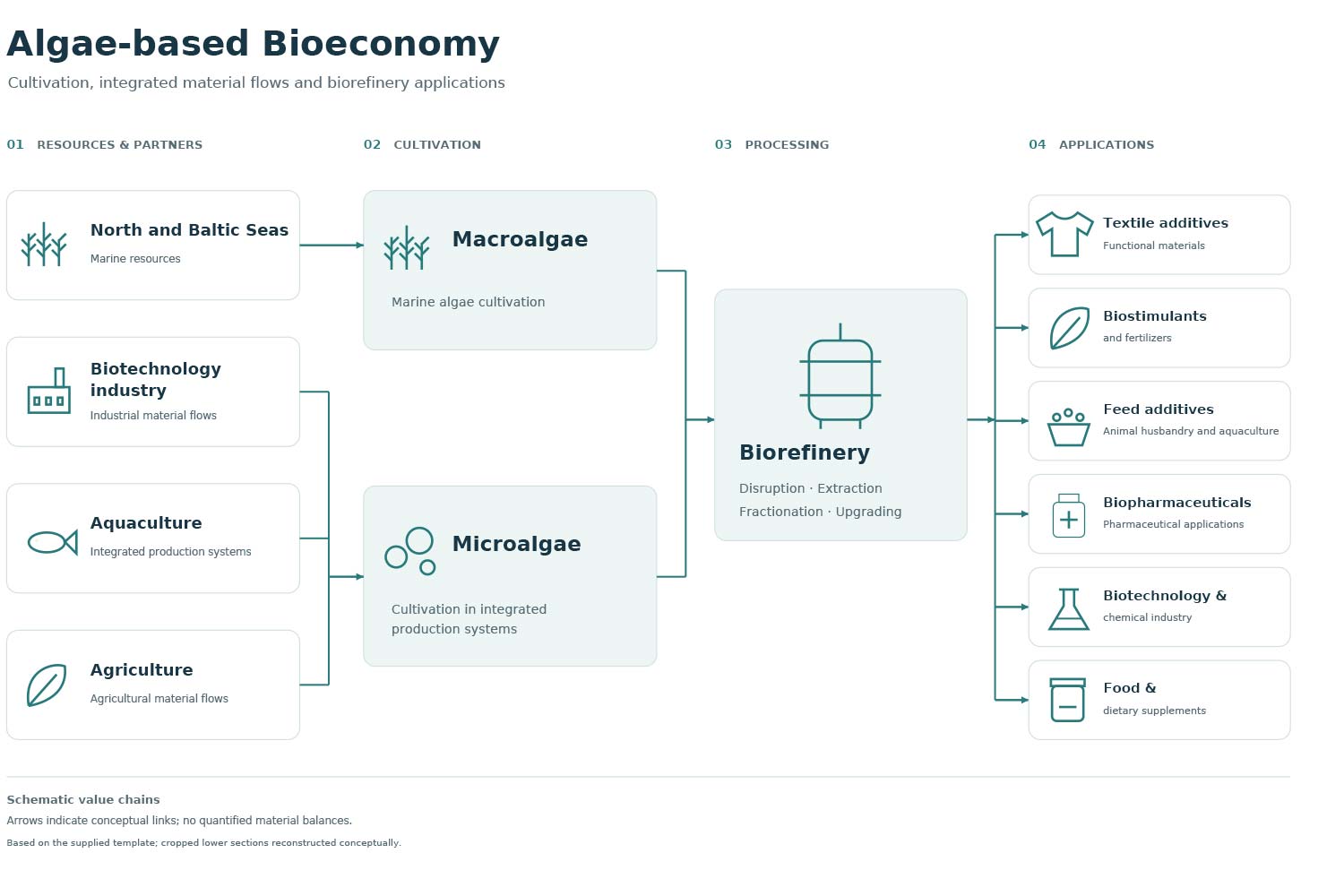
Marine algae have considerable biotechnological potential as sources of valuable fatty acids, pigments, and other bioactive compounds. Their omega-3 polyunsaturated fatty acids (PUFAs), particularly EPA and DHA, are of interest for nutrition, pharmaceuticals, and aquaculture. Algal pigments such as fucoxanthin, astaxanthin, and phycobiliproteins are being explored for use as natural colorants and for their potential antioxidant and health-related properties. Algal proteins, vitamins, sterols, and other metabolites offer promising opportunities in food, cosmetics, and drug discovery. Sustainable cultivation and improved extraction methods could enable the cost-effective production of these compounds for a wide range of applications. For example, algal biomass can be processed using specific enzymes, supporting its use in biotechnology and various bioeconomical processes.